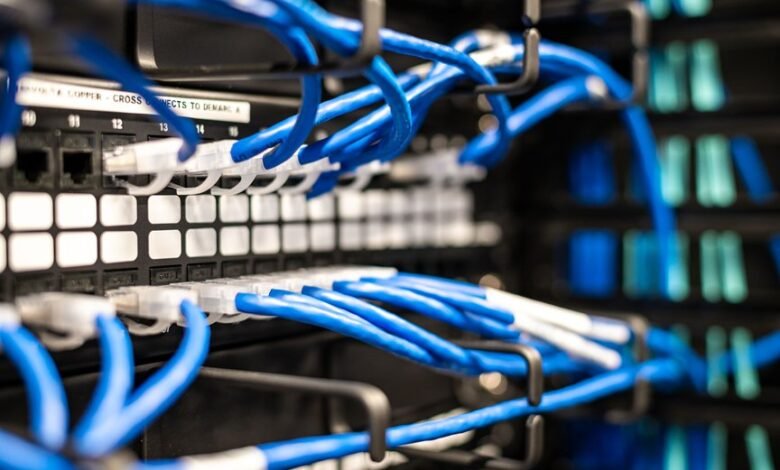
The 10.90.2 Private Network IP Configuration Guide outlines a non-routable internal address space and its governance, emphasizing address conservation and predictable traffic. Subnet sizing balances scalability with simplicity, while critical devices receive reserved addresses. Gateways and routing are defined with static routes and concrete gateway addresses. Clear policies, troubleshooting steps, and auditable remediation ensure stable connectivity. The framework invites scrutiny of planning foresight and future growth, leaving a basis to question current configurations and proceed with disciplined implementation.
What 10.90.2 Private Networks Are and Why They Matter
Private networks in the 10.90.2 range designate a non-routable subset of addresses used for internal communications within an organization. This framework supports privacy governance by controlling exposure and auditability of traffic. It also promotes address conservation through reuse within isolated domains. The arrangement enables predictable traffic patterns, reduces external dependency, and invites disciplined configuration practices without compromising operational agility or security.
How to Choose Subnet Sizes and Allocate Addresses
Determining appropriate subnet sizes and address allocations for the 10.90.2 private network requires a balance between scalability and simplicity: larger subnets reduce management overhead but increase broadcast domains, while smaller subnets improve isolation at the cost of fragmentation.
Subnet planning dictates practical ranges, while address reservation ensures critical devices remain reachable, preserving predictable topology and future growth without compromising security or clarity.
Step-by-Step Guide to Configuring Gateways and Routing
With subnet sizing established, the next step is to configure gateways and routing to enable proper inter-network communication within the 10.90.2 private space.
The procedure sets gateway addresses, defines static routes, and implements policies for Subtopic idea1 and Subtopic idea2.
Routing tables must reflect intended paths, minimize hops, and ensure predictable, freedom-friendly connectivity across 10.90.2 networks.
Troubleshooting Common 10.90.2 Private Network Issues
Often, network administrators encounter common 10.90.2 private-space issues that impede connectivity, performance, or security; a structured troubleshooting approach isolates symptoms from root causes. The discussion ideas focus on diagnostic checkpoints, packet loss, and misconfigured ACLs within private networks. Observations are documented, isolation tests performed, and remediation actions recorded to ensure repeatable, auditable resolution and enduring network resilience.
Frequently Asked Questions
How Do I Monitor 10.90.2 Private Networks in Real Time?
Real time monitoring is achieved by streaming network telemetry from all 10.90.2 private networks to a centralized observability platform, enabling instantaneous alerts, dashboards, and anomaly detection through automated probes, sampling, and low-latency data pipelines for proactive insight.
What Security Best Practices Apply to 10.90.2 Networks?
Security best practices for 10.90.2 networks include conducting ongoing risk assessment, enforcing network isolation, and strict data handling procedures; they minimize security breach exposure while preserving freedom to operate within controlled, auditable boundaries.
Can 10.90.2 Addresses Be Used Across Multiple Sites?
Yes, 10.90.2 addresses can be reused across sites with careful planning. Specifically, implement Site Scoped Addressing and manage Private Addressing Overlaps to avoid conflicts, ensuring routing consistency and security freedom across geographically separate sites.
How Do I Migrate From 192.168.X to 10.90.2?
Migration strategies enable gradual 192.168.x to 10.90.2 transition; IP plan mapping aligns subnets, minimizes site wide overlap, and guides 10.90.2 adoption across networks while preserving service continuity and administrative freedom.
What Are Common Compliance Considerations for 10.90.2 Deployments?
Privacy governance and data localization are central compliance considerations for 10.90.2 deployments; organizations must align access controls, auditing, and retention with regulatory frameworks, while preserving operational autonomy and freedom to adapt security configurations as networks evolve.
Conclusion
In the 10.90.2 private network, order and privacy coexist—visibility is narrowed, yet control is broadened. Juxtaposing quiet, private addresses with the loud demand for reliable uptime reveals a discipline of restraint: conserve space while enabling growth. The guide pairs auditable, static configurations with flexible routing, illustrating that security gains through governance do not preclude scalability. Ultimately, predictable traffic patterns emerge from meticulous planning, delivering stable connectivity amid evolving internal needs.