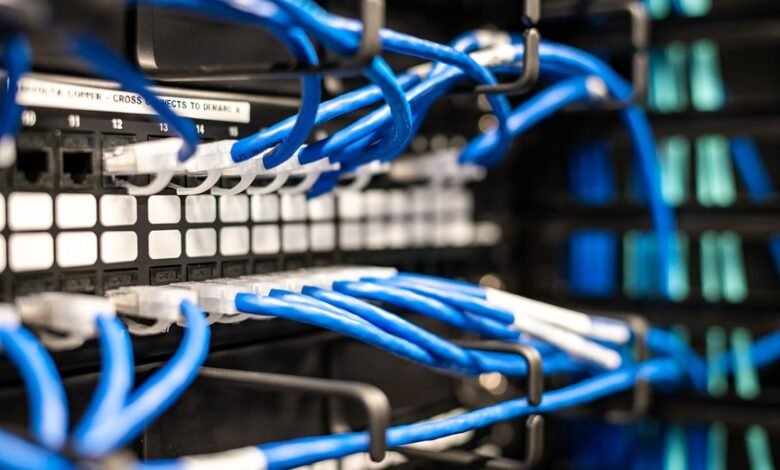
The 16.1.10 Private Network Configuration Guide presents a structured approach to isolated, auditable networks. It prioritizes topology and addressing plans that ensure predictable routing and scalable growth. Core controls emphasize segmentation, role-based access, and policy enforcement. Ongoing monitoring, hygiene, and disciplined change management support rapid incident response. Interoperability and governance address cross-vendor operations and evolving requirements. The framework invites careful assessment of tradeoffs and concrete implementation steps to justify continued consideration.
What Is a Private Network and Why It Matters
A private network is a dedicated communications infrastructure that isolates traffic from public networks to ensure controlled access, security, and reliability. It aligns with private network objectives, supporting topology planning and addressing plan development. Access controls, segmentation, and policy enforcement define authorized interactions, while monitoring and security hygiene sustain resilience. Troubleshooting procedures and clear governance enable robust, auditable network operation.
Choosing a Topology and Addressing Plan
Choosing a topology and addressing plan is foundational for a private network, as it determines path efficiency, fault domains, and scalable growth. The analysis isolates a privacy topology to minimize exposure while preserving connectivity, and defines an addressing plan that ensures predictable routing, minimal overlap, and growth margins. This structured approach supports robust performance, ease of maintenance, and freedom to evolve architectures.
Access Controls, Segmentation, and Policy Enforcement
Access controls, segmentation, and policy enforcement form the core mechanisms that govern who may access what resources, where lateral movement is restricted, and how security obligations are validated across the private network.
The approach supports privacy governance and enforces network segmentation through explicit policies, role-based access, and contextual trust checks, ensuring resilient, auditable, and scalable protection without compromising operational freedom.
Monitoring, Security Hygiene, and Troubleshooting
Monitoring, security hygiene, and troubleshooting build on the prior focus on access controls and segmentation by establishing continuous visibility, disciplined maintenance, and rapid remediation workflows within the private network.
The approach emphasizes continuous monitoring, anomaly detection, and disciplined change control, enabling swift containment and root-cause analysis.
Latency considerations and vendor interoperability shape configuration choices, performance benchmarks, and interoperation strategies for resilient, freedom-oriented networks.
Frequently Asked Questions
How Do I Estimate Total Private Network Costs?
A methodical approach estimates total private network costs by aggregating capital expenditures, ongoing operating expenses, and usage-based fees. It enables, through clear assumptions, a structured, private networking cost estimation process balancing performance needs with budgetary freedom.
What Are Best Practices for Vendor Interoperability?
Vendor interoperability requires standardized interfaces, data models, and open protocols, enabling seamless integration. Policy governance ensures clear ownership, compliance, and change control. Structured evaluation, ongoing benchmarking, and risk assessment sustain freedom to adapt while maintaining compatibility across providers.
How Often Should I Review Private Network Policies?
“Time is money,” notes the guide: review cadence for private network policies should occur quarterly, with annual full policy audits. The cadence ensures ongoing compliance, adaptability, and freedom to evolve, while explicit change logs support transparent policy cadence management.
Can Private Networks Coexist With Public Cloud Services?
Yes, private networks can coexist with public cloud services. However, interoperability challenges arise, requiring careful planning for vendor compatibility and robust governance to enable seamless Public cloud coexistence while preserving security and performance in heterogeneous environments.
What Metrics Indicate Network Performance Degradation?
An accurate assessment: abrupt anomalies, jitter, packet loss spikes, and rising retransmission rates indicate degradation. Latency trends and bandwidth utilization shifts reveal sustained congestion or path issues impacting throughput, reliability, and user experience in private networks.
Conclusion
A private network is disciplined, predictable, and resilient. A disciplined design yields predictable routing; a disciplined design yields scalable growth. A disciplined design enables controlled access; a disciplined design enables auditable operations. A resilient topology sustains continuity; a resilient topology sustains rapid incident response. A structured addressing plan minimizes overlap; a structured addressing plan enables efficient troubleshooting. A policy-enforced environment ensures governance; a policy-enforced environment ensures interoperability. In discipline, resilience; in structure, certainty.