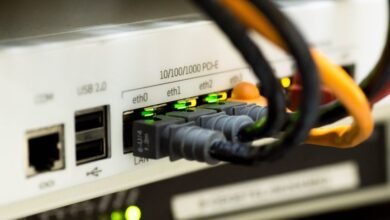
The topic explores 168.1.1.254 as an invalid IP format and the steps to diagnose it. It examines how typographical errors, non-numeric characters, or miscounted octets breach IPv4 rules and disrupt routing and access controls. The discussion itemizes common causes and outlines a disciplined troubleshooting approach with repeatable tests and rollback plans. It finishes with preventive controls and quick validation checks, leaving a precise rationale for continuing to identify and fix the root cause.
What 168.1.1.254 IP Format Tells Us
The IP address 168.1.1.254 reveals that it resides within the 168.1.1.0/24 subnet, indicating a specific network segment with a 24-bit mask that defines the range of usable host addresses.
This observation informs network security considerations and firmware updates planning, emphasizing controlled access, passive monitoring, and reliable device maintenance while preserving freedom to innovate within secure boundaries.
Common Causes of Invalid IP Formats
Common causes of invalid IP formats stem from both typographical errors and structural mismatches with standard addressing schemes. Invalid ip entries often result from miscounted octets, incorrect separators, or non-numeric characters. These flaws hinder routing and validation. Awareness supports troubleshooting tips, enabling precise checks of syntax, range limits, and segmentation, thereby reducing misconfiguration without introducing unnecessary complexity or ambiguity.
Step-by-Step Troubleshooting for 168.1.1.254 Issues
To diagnose 168.1.1.254-related issues, practitioners should begin with a structured verification of the address’s syntax and network placement before examining device-specific configurations.
Systematic checks isolate misconfigurations, broadcast conflicts, and routing anomalies.
Emphasize repeatable testing, documented results, and rollback plans.
Network security and IP governance considerations guide calibration, access control, and audit trails, ensuring compliant, auditable remediation outcomes.
Preventive Practices and Quick Validation Checks
Preventive practices build on structured verification by emphasizing proactive controls and ongoing validation to minimize recurrence of 168.1.1.254-related issues.
The approach evaluates exploratory routing and wireless diagnostics for early anomaly detection, configuration drift, and firmware integrity.
Implemented checks include baseline comparisons, automated alerts, and periodic audits, enabling rapid containment, reproducible testing, and objective metrics that support disciplined, freedom-oriented network resilience.
Frequently Asked Questions
Can 168.1.1.254 Resolve Domain Names Directly?
No, 168.1.1.254 does not resolve domain names directly; it is an IP address. In practice, domain parsing relies on DNS. Routers use defaults to forward queries to configured DNS servers, not to resolve domains themselves.
Is 168.1.1.254 Reserved for Local Networks?
Yes, 168.1.1.254 is not globally reserved for private addressing; it falls outside standard private ranges. It relates to IP ownership, subnet mapping, Domain level routing, and private addressing considerations, guiding decentralized domains and routing policy design for freedom-seeking networks.
Do ISPS Block 168.1.1.254 Traffic?
ISPs do not universally block 168.1.1.254 traffic; blocking depends on policy. In analysis, some ISPs may filter blocklisted ports or constrain internal routing, disrupting local-device access while preserving broader connectivity and user autonomy.
How Does IPV6 Handle 168.1.1.254?
IPv6 does not use 168.1.1.254; that address is IPv4. In IPv6 addressing, routing ignores IPv4 private-like patterns, converting relevant traffic via tunneling or translation. Network traffic with IPv6 remains unaffected, provided proper IP formatting and routes are configured.
Can VPNS Affect 168.1.1.254 Reachability?
VPN influence can affect reachability to 168.1.1.254 via altered Local routing, potential tunnel leaks, or policy-based blocking. It analytically notes that route changes may restrict or enable access, depending on endpoints, encryption, and network topology.
Conclusion
Conclusion:
The 168.1.1.254 case, though seemingly trivial, exposes the fragility of network syntax—a single misplaced dot can derail an entire conduit. When format fails, intent and reach falter; when corrected, clarity and trust resume. Precision in input governance transforms chaos into predictable traffic, turning errors into diagnostic milestones. In this measured landscape, verification steps act as a compass, guiding devices back to reliable alignment and governance-driven resilience.